Most families care more about the roast potatoes than the turkey. That is useful to know, because potatoes need the hottest oven of the day, and they need it at the moment the roast has just come out. Plan the sides around that hour and almost everything falls into place.
The shelf plan for the last hour
| Shelf | 14:00 | 14:20 | 14:50 |
|---|---|---|---|
| Top | Potatoes in hot fat | Turn potatoes | Out |
| Middle | Carrots and parsnips | Shake the tray | Out, glaze with honey |
| Bottom | Empty | Stuffing, pigs in blankets | Out |
| Hob | Nothing yet | Gravy on low | Sprouts done at 14:45 |
All at 220°C (200°C fan, gas 7, 425°F). If your oven runs cool or the trays are crowded, swap the top and middle trays at 14:30.
Roast potatoes
Use a floury variety: Maris Piper and King Edward are the standard choices in British shops, Russets in North America. Cut into pieces about the size of a hen's egg. Parboil in well-salted water for eight minutes, drain and leave for two minutes, then shake the pan hard with the lid on so the edges go fluffy. Heat 150 g goose or duck fat in a large tin for ten minutes before the potatoes go in; they should sizzle loudly. Don't crowd them. Two tins are better than one heaped tin. Fifty minutes, turned once.
Vegetarian table? Use sunflower or rapeseed oil. The crunch comes from the parboil and the heat, not the fat.
Brussels sprouts
Sprouts stay on the hob so they don't fight for oven space. Halve them on the 24th. At 14:35, fry 150 g smoked lardons in a wide pan until crisp, add the sprouts cut side down with a knob of butter and cook for six to eight minutes, stirring now and then, until browned and just tender. A squeeze of lemon at the end. If you prefer them boiled, five minutes in salted water is enough for halves.
Carrots and parsnips
Cut into batons of similar thickness so they finish together. Toss with oil, salt and pepper and roast for 50 minutes. Drizzle with two tablespoons of honey as they come out; adding honey earlier tends to burn at 220°C.
Stuffing and pigs in blankets
Sage and onion stuffing made on the 23rd goes in cold at 14:20 and needs about 30 minutes; sausage meat must be cooked through and piping hot. Pigs in blankets share the same shelf and the same 30 minutes.
Make-ahead gravy
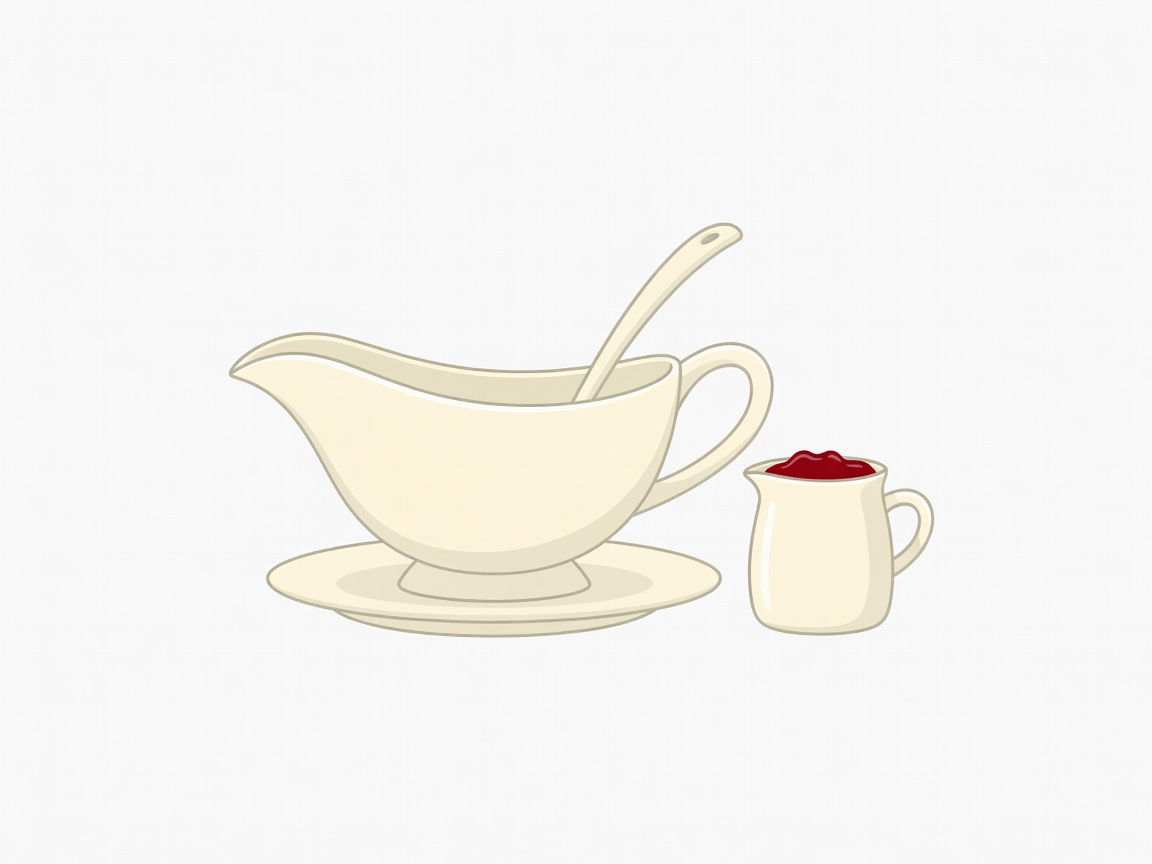
- On the 23rd, roast 1 kg chicken wings with two halved onions, a carrot and a celery stick at 200°C for 45 minutes, until dark brown.
- Tip into a large pan, stir in 2 tablespoons plain flour, then add 1.5 litres of water or weak chicken stock. Scrape the tin into the pan with a splash of the water.
- Simmer gently for an hour. Strain, pressing the wings. You should have about a litre.
- Season, cool and chill. It sets like jelly; that is the good part.
- On the day, reheat gently from 14:20 and stir in the juices from the turkey's resting plate just before serving.
Bread sauce and cranberry sauce
Bread sauce is the one that puzzles newcomers. Warm the infused milk from the 23rd, stir in about 100 g fresh white breadcrumbs and a knob of butter, and let it thicken for five minutes over low heat. Season with nutmeg. Cranberry sauce is served cold or at room temperature, straight from the jar you made on the 23rd.
When the hob runs out of rings
Four rings is plenty: gravy, sprouts, bread sauce and the kettle for warming the gravy jug. If you have two, make bread sauce at 14:00 and keep it warm in a small covered bowl on top of the resting turkey's foil.
Scaling down for fewer people? See Christmas dinner for two or four.